I was at the European Athletics Championships in Birmingham last week. The athletics was brilliant. The stands? A bit thin. And everyone seemed to know why.
The tickets were too expensive.
They may have had a point. Some of the top-end prices were eye-watering, particularly if you were thinking of taking the whole family.
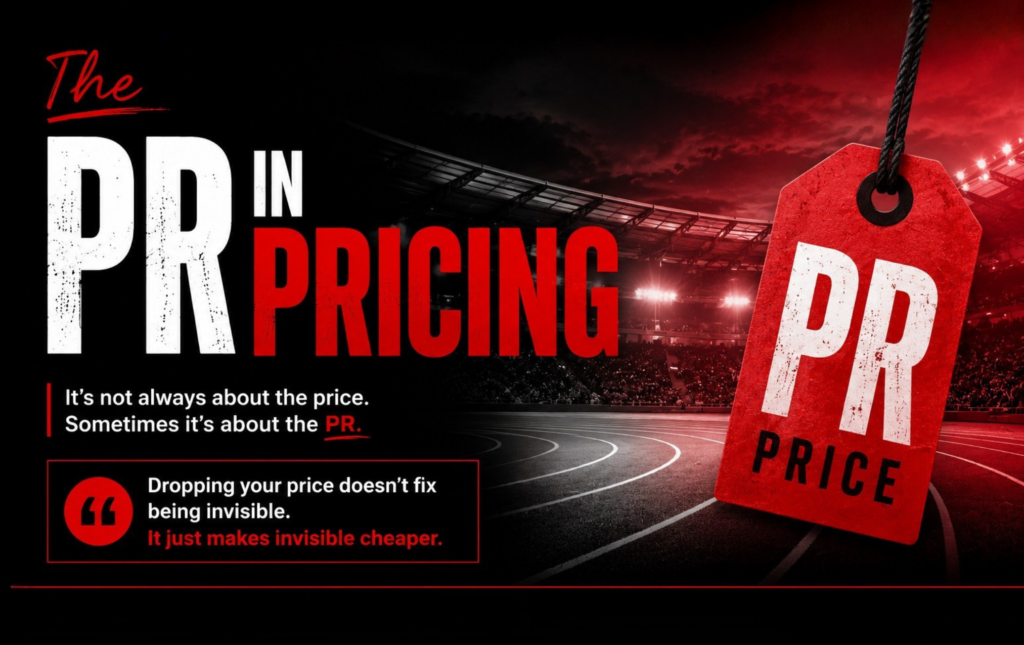
But while everyone else was talking about the PRICE, I couldn’t stop looking at the first two letters. PR.
Because I think there was a PR problem hiding inside the PRicing problem.
Look at the events that can charge extraordinary prices and still have people fighting to get in. Glastonbury tickets aren’t cheap. Oasis tickets certainly weren’t. People complained bitterly about some of the prices and then promptly joined enormous online queues trying to buy them. Why?
Demand had been built long before anyone reached for their credit card. People knew the names. They knew the songs. They knew the stories. They’d already decided they wanted to be there. Athletics had a much harder sell.
Outside the genuine athletics fans, how many people could name the athletes they were being asked to pay serious money to watch? That matters.
You can put a premium PRice on something people desperately want. It’s considerably harder when most of your potential market doesn’t know why they should want it in the first place.
And this is where I started thinking about business owners, because I see exactly the same thing happen all the time.
The enquiries dry up. Proposals aren’t converting. Somebody says you’re expensive. And eventually you start wondering whether the answer is to knock a bit off the price.
Dropping Your Price Doesn't Fix Being Invisible. It Just Makes Invisible Cheaper.
Before you start discounting, there’s another question worth asking. Does the market actually know who you are?
Because imagine two experts quoting £5,000 for essentially the same piece of work.
One has been featured in the media. They’ve written articles. They’ve spoken at events. You’ve seen their opinions quoted. Search their name and there’s evidence everywhere that they know their stuff. The other sends you a proposal.
Same price. Completely different perception of the price.
That’s the bit we sometimes miss when talking about PR. Profile isn’t just about getting your name in the paper and feeling important. Done properly, it builds familiarity, credibility and authority around your name. And those things have commercial value.
Which brings me back to Birmingham. By the end of the championships, something fascinating had happened.
Amy Hunt had become a star.
Four gold medals. Huge performances. Millions watching on the BBC. Suddenly there was a name, a face and a story that people knew.
That’s exactly the sort of thing that can help fill those seats next time. The frustrating part is that athletics needed more of those stories before people were deciding whether to buy tickets.
Imagine if considerably more of the British public had arrived at the championships already knowing who Amy Hunt was, already following Keely Hodgkinson’s story and already having favourites they desperately wanted to see.
Would people still have complained about the prices? Probably. Would more of them have paid anyway? I’d put money on it. And there’s the lesson for the rest of us.
Next time somebody tells you you’re expensive, don’t immediately reach for the calculator. Take another look at the word. PRice.
The clue was sitting there all along. Build the name. Build the reputation. Build the demand. Then charge what you’re worth.
Greg