
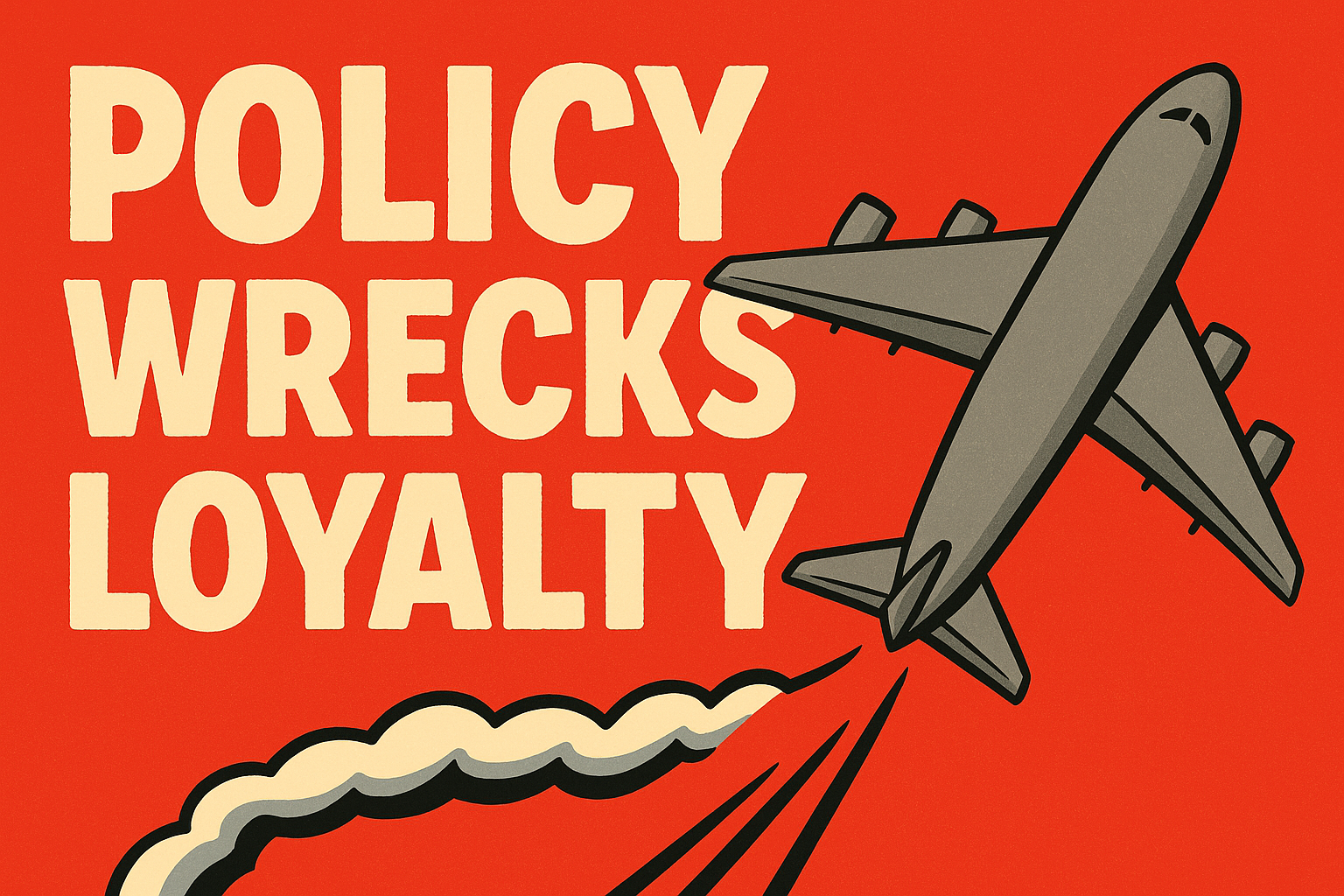
Stephen Crean got stabbed seven times stopping a knife attacker on a train.
Saved multiple lives.
Then couldn’t make his Ryanair flight to Austria because… he was in hospital recovering from being stabbed seven times.
Asked for a refund.
Ryanair said no.
Policy.
Nottingham Forest FC heard what happened.
Gave him £10,000 for treatment.
Free season ticket for next year.
Invite to fly with the team to a Europa League match.
Fans raised another £50,000.
Same hero. Two completely different responses.
And here’s the thing that gets missed in these stories — Ryanair’s policy makes perfect sense most of the time.
They operate on volume. Millions of passengers. Tight margins.
No refunds keeps the whole system simple and scalable.
Works great for 99.9% of situations.
This was the 0.1%.
Where following your rulebook costs more than breaking it.
Forest recognised something that compounds → when you handle an exception well, customers retell that story.
They turned £10,000 into years of goodwill and international PR.
Ryanair saved a few hundred quid and became the villain in a viral story that’ll follow them for months.
Your business will hit moments like this. Probably not knife attacks, but situations where the standard process fails the moment.
The question isn’t whether to have policies.
It’s whether you’ve built judgment into your exception process.
Who decides when to override?
What triggers a review?
How do you capture the upside when you do?
Most businesses don’t have answers. They either cave to every complaint or hold rigid lines until something like this happens.
Forest had a system that let them move fast when it mattered.
Build yours before you need it.
What’s your exception protocol look like?
 Like and share if your business has ever faced a moment where the rulebook didn’t fit.